Plenty of Parksville business owners treat office painting like a weekend project: pick a colour, call someone with a brush, done. But office painting without the right plan tends to create a different kind of problem, like fumes your staff cannot breathe around, walls that look tired within a year, and a repaint that costs more in lost time than the job itself. Office building painting is a different animal than painting a spare bedroom, and the mistakes that come from treating it the same way are expensive to fix.
Key Takeaways
- The wrong paint sheen for office walls wears out fast and becomes impossible to clean.
- VOC exposure during interior painting can seriously affect staff health and concentration.
- Poor scheduling turns a paint job into a productivity disaster.
- Colour choices that ignore how people actually work in a space can quietly drain morale.
- Skipping proper surface prep leads to premature paint failure, no matter how good the finish coat is.
- Hiring a contractor without a clear commercial process often means surprises mid-project.
Why the Wrong Paint Sheen Costs You More Than You Think
Walk into most offices and the walls are painted with whatever the last person grabbed off the shelf. More often than not, that means a flat or matte finish, and in a busy office that is a problem.
Flat and matte paints are affordable, easy to apply, and good at hiding imperfections because they absorb light. But they also absorb dirt and are nearly impossible to clean, so a wall that looked great on day one turns scuffed and dingy within months, and scrubbing it only strips the paint.
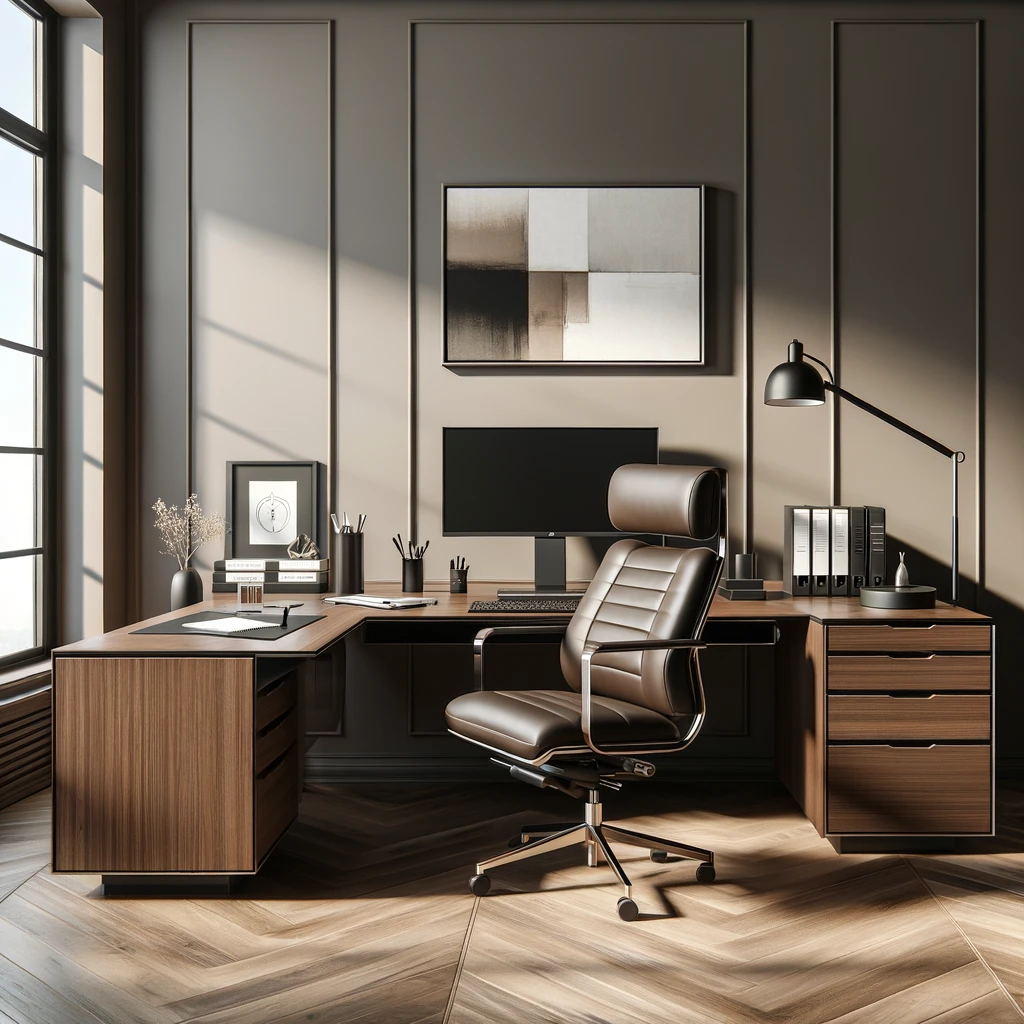
For corridors, reception areas, and breakrooms, a semi-gloss finish holds up in high-traffic zones. For main workspace walls and meeting rooms, satin offers a good compromise, with a soft sheen and a refined look that wipes clean.
A sheen mismatch between zones, like flat in hallways and satin in boardrooms, also creates a visual inconsistency that makes a professionally painted office look like a DIY job. A painter who understands commercial interiors maps the right finish to each area first, which heads off one of the commercial painting problems that hurt tenant satisfaction.
The VOC Problem Nobody Warns You About
When a crew shows up to repaint an occupied office, the air-quality issue is real, and it is not just about the smell.
Volatile organic compounds (VOCs) are gases released by many paints as they dry, and some carry short- and long-term health effects. Many of them reach far higher concentrations indoors than outdoors, by as much as ten times, according to the U.S. Environmental Protection Agency.
That up-to-ten-times figure applies directly to spaces where conventional paints are used. For staff sitting at desks all day, that is not minor, since headaches, dizziness, and trouble concentrating are common short-term effects of indoor VOC exposure.
The fix is straightforward, but only if your contractor is thinking about it before they arrive. Low-VOC formulations let employees return to work sooner with fewer complaints about fumes, and they support better staff health, which is the same logic behind choosing the right paints for restrooms and utility areas.
If a painting company is not discussing product selection with you, including VOC content, that is a gap worth closing before the job starts. It is also worth asking about sustainable painting practices that cut odour and waste before you commit to any product.
Scheduling That Ignores Your Business Is a Problem Waiting to Happen
Office building painting that runs during normal business hours, in spaces where staff are trying to work, creates a compounding series of problems. It is not just the smell, it is the noise, the blocked areas, and the constant movement of equipment through your space.
Environmental disruptions hit harder than most owners realize. According to a World Green Building Council report, background noise alone can cut productivity by as much as 66%, and adding paint fumes, blocked workspaces, and shifting schedules only compounds it.
A contractor without a clear commercial scheduling process often starts at one end of the building and works through in whatever order suits them, not you. The better approach is zoning: working in phases and finishing one section before moving on, so parts of your office stay fully operational throughout.
Breaking the project into phases is the simplest way to limit disruption. If your building needs a full repaint, dividing it into sections lets part of your business run as normal while the crew focuses elsewhere.
For many Parksville offices, evenings and weekends are also an option. The key is talking through your schedule before the job begins, not after the crew arrives on a Monday during your busiest client week of the quarter.
Color Choices That Work Against Your Team
A fresh coat of paint is a real chance to shape how your space functions, not just how it looks. But color decisions made without thought to how people actually work often create environments that feel wrong in ways that are hard to name.
Cool colors like blue, green, and violet tend to promote calm and concentration, which makes them effective in individual workspaces where focus is the priority. Green in particular is linked to balance and helps reduce eye strain and mental fatigue during long hours of screen time.
Harsh whites with cool undertones can make a space feel sterile and clinical. Too much pure white reads as cold and uninviting, so a softer, warmer off-white is often the better choice.
Bright accent colors are not automatically a problem, but context matters. Yellow can spark creativity and optimism, yet because it is the most tiring color to the eye, it works best in accents rather than as a dominant hue.
A palette chosen at random, or lifted from what looked good at someone’s house, can work against the environment you want for your team and clients. A painter who asks about your business, your clients, and how your team uses each space is bringing something genuinely useful.
When Surface Prep Gets Skipped, the Finish Pays for It
In office building painting, skipping or rushing surface prep is one of the most common reasons a job looks bad within a year. Walls in commercial spaces take a beating: scuffs, nail holes, tape marks, hand oil near switches, and in older buildings, failing layers of old paint.
Painting over those issues without addressing them first leaves the new finish nothing solid to grip, so it peels, bubbles, or wears early and makes a fresh repaint look old before its time. The poor surface preparation errors behind cracks and premature failure are almost always avoidable, but only with a team that treats prep as seriously as the finish coat.
Priming is part of this. Zero-VOC and low-VOC primers help limit indoor air pollution while creating the bonding layer that makes the finish coat stick, so skipping primer on a patched or previously unpainted surface is a shortcut that shows up later.
If you want to see how primer fits into a quality job, this breakdown of why primer still matters is a good place to start.
Choosing the Wrong Contractor Is Its Own Category of Problem
Not every painting company that quotes your office building painting job actually does its own work. Subcontracting is common in the trades, which means the crew that shows up may have no direct relationship with the company you hired, or any accountability to your project.
This matters more in commercial settings than residential ones. Your office has operating hours, staff, clients, equipment, and a schedule that does not stop for a paint job, and a subcontracted crew has no reason to understand or care about any of it. They are completing a job someone else sold, with details that may or may not have been passed along clearly.
Before hiring anyone for office painting in Parksville, ask a few direct questions.
- Does your team do its own work, or do you subcontract?
- How do you plan scheduling around a working office?
- What products do you use, and what is the VOC level?
- Do you offer a workmanship warranty after the job is done?
These are not hard questions for a contractor who takes commercial work seriously, and vague answers tell you something. It is also worth reviewing the most common painter red flags so you know exactly what to watch for before signing anything.
What a Well-Handled Office Building Painting Job Looks Like
An office building painting job that accounts for all of the above, product selection, scheduling, surface prep, colour guidance, and a contractor who does its own work, produces a noticeably different outcome. Staff notice it, clients notice it, and the result holds up, so you are not making the same decision again in two years.
Bigger Picture Painting works with business owners and property managers across Parksville and mid-Vancouver Island on exactly these projects. There is no subcontracting, since every crew member is screened and trained in-house, and every job comes with a 3-year workmanship warranty and a limited lifetime product warranty on select products. The process starts with a free, custom estimate based on your actual space, your hours, and how your business operates.
When you are ready to talk through your office painting project, Bigger Picture Painting can put together a plan that fits your schedule and gets it done right the first time. Call 778-200-7756 for a FREE estimate today.