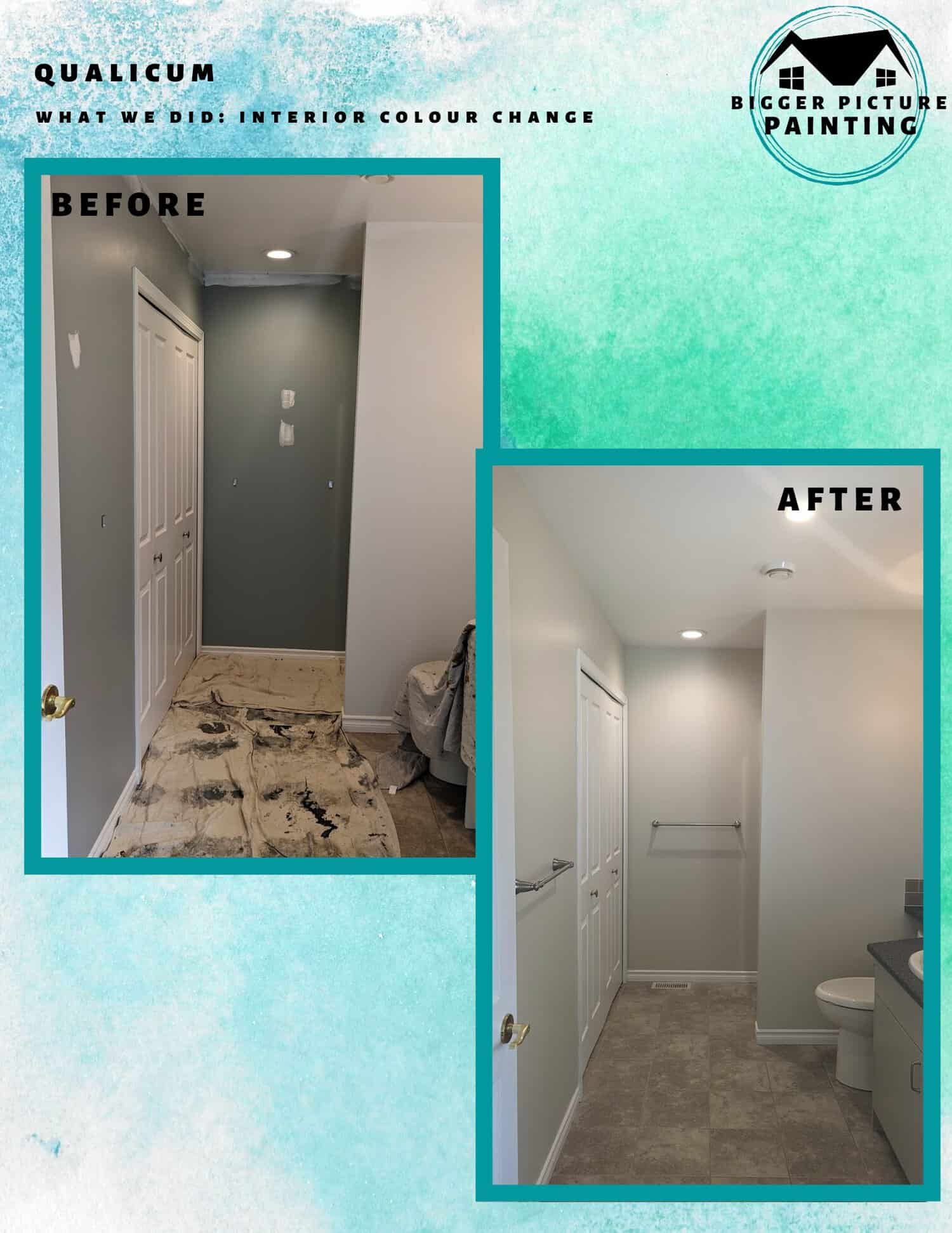
Restrooms and utility rooms face constant humidity, cleaning, and abrasion. These environments accelerate paint failure, invite microbial growth, and compromise appearance. Standard architectural coatings are not formulated for these stressors.

Key Takeaways

  • Standard architectural coatings fail in high-humidity zones — restrooms and utility rooms need formulated moisture-resistant systems with mildewcides and tight polymer networks.
  • Avoid flat or matte finishes in any humid zone — satin and semi-gloss are the minimum for cleanability and moisture resistance.
  • Specify by ASTM standard: D3273 (mold resistance, 28-day chamber), D2486 (scrub resistance — Class 1 = over 1,000 cycles), and D1308 (chemical spot testing).
  • Antimicrobial coatings like Sherwin-Williams Paint Shield® kill 99.9% of MRSA, E. coli, VRE, and S. aureus within 2 hours — essential for healthcare, food service, and daycare.
  • Healthcare and food facilities must meet CDC/FDA/OSHA requirements for cleanable, non-absorbent surfaces in sanitation zones; failure can mean citations or shutdowns.
  • Surface prep determines paint longevity: degrease with TSP, spot-prime stained or porous areas with mold-blocking primer, sand glossy surfaces, and recoat every 3–5 years per warranty cycle.

Why Paint Choice Matters in Restrooms & Utility Areas

Humidity and Vapor Exposure

Humidity leads to condensation, especially in unventilated or intermittently climate-controlled areas like staff restrooms, mop closets, and mechanical rooms. Wall assemblies in these areas often operate near or at dew point, leading to paint film failure. Key symptoms include:

  • Bubbling and blistering from trapped moisture under vapor-impermeable paints
  • Efflorescence and salt leaching on concrete and masonry walls
  • Fungal colonization (Aspergillus, Penicillium, Cladosporium) on organic surfaces

Moisture vapor transmission rate (MVTR) is critical. Coatings in high-humidity interiors must allow vapor diffusion while preventing liquid water ingress. Acrylic-modified latex systems with added biocides typically perform best under these conditions.

Chemical and Mechanical Stress

Commercial restrooms and janitorial zones are cleaned with bleach, quats, degreasers, or acidic descalers. These chemicals degrade film integrity over time. Inadequate coatings discolor, soften, or even emulsify under repeated chemical exposure.

Additionally, surfaces are subjected to:

  • Abrasion from mop handles, carts, or brushes
  • Repeated wet-dry cycles from cleaning routines
  • Grease and soap scum buildup

To withstand this, paints must be tested for:

  • ASTM D2486: Scrub resistance
  • ASTM D1308: Chemical resistance (spot testing)
  • ASTM D6904: Resistance to wind-driven rain (if exterior air infiltration is a concern)

Public Perception and Risk Exposure

Visibly peeling or mildewed paint undermines a facility’s cleanliness. In sectors like healthcare or food service, this can directly impact compliance inspections. In offices or hospitality, it affects brand perception.

Paint failure in restrooms may also contribute to:

  • Increased bacterial harborage
  • Reduced indoor air quality
  • Complaints or negative customer reviews

Regulatory and Design Requirements

  • ADA: Paint must meet minimum LRV (light reflectance value) contrast between surfaces for visually impaired users.
  • CDC/FDA/OSHA: Healthcare and food facilities require “cleanable, non-absorbent surfaces” in sanitation zones.
  • Local health codes: Often specify mildew-resistant or semi-gloss finishes in employee restrooms.

Failure to comply can lead to citations, shutdowns, or denial of operating licenses.

Paint Performance Criteria for Humid Environments

Moisture and Mold Resistance

Use interior paints with integrated mildewcide additives and fungistatic coatings. High-performance moisture-resistant paints often use:

  • Zinc pyrithione or IPBC as fungicides
  • Acrylic-urethane binders for hydrophobic surface chemistry
  • Tight polymer networks to limit capillary absorption

Test standard: ASTM D3273 (Resistance to mold in a 28-day chamber test)

Best-in-class paints will retain their film integrity and show ≤10% fungal coverage in lab conditions.

Scrub and Abrasion Durability

Measured by ASTM D2486, Class 1 scrub resistance equates to >1,000 scrub cycles before film failure. This is essential for spaces cleaned daily or with aggressive pads. Look for:

  • Cross-linked acrylics or epoxy-modified latexes
  • Scuff-resistant surface modifiers (e.g., polyurethane beads)

Chemical Resistance

Evaluate paints using spot testing of:

  • Sodium hypochlorite (bleach) – 5.25%–6% concentration
  • Quaternary ammonium compounds
  • Hydrogen peroxide (3–5%)
  • Alkaline degreasers (pH 10+)

Coatings with poor resistance will soften, discolor, or lose gloss after 24-hour exposure.

Antimicrobial Properties

Select coatings with EPA-registered antimicrobial claims where required. These may be:

  • Microbicidal paints (e.g., Sherwin-Williams Paint Shield®) that kill bacteria on contact
  • Antimicrobial paints that inhibit microbial growth but don’t kill pathogens

Applications: Hospitals, assisted living centers, veterinary clinics, daycare restrooms.

Fast Drying and Low Odor

Occupied commercial buildings benefit from fast return-to-service. Preferred coatings should be:

  • <50 g/L VOC (meets LEED and Green Seal standards)
  • Touch dry in <1 hour
  • Recoatable within 2–4 hours

This minimizes downtime in high-use facilities and avoids occupant complaints.

Paint Finish Selection
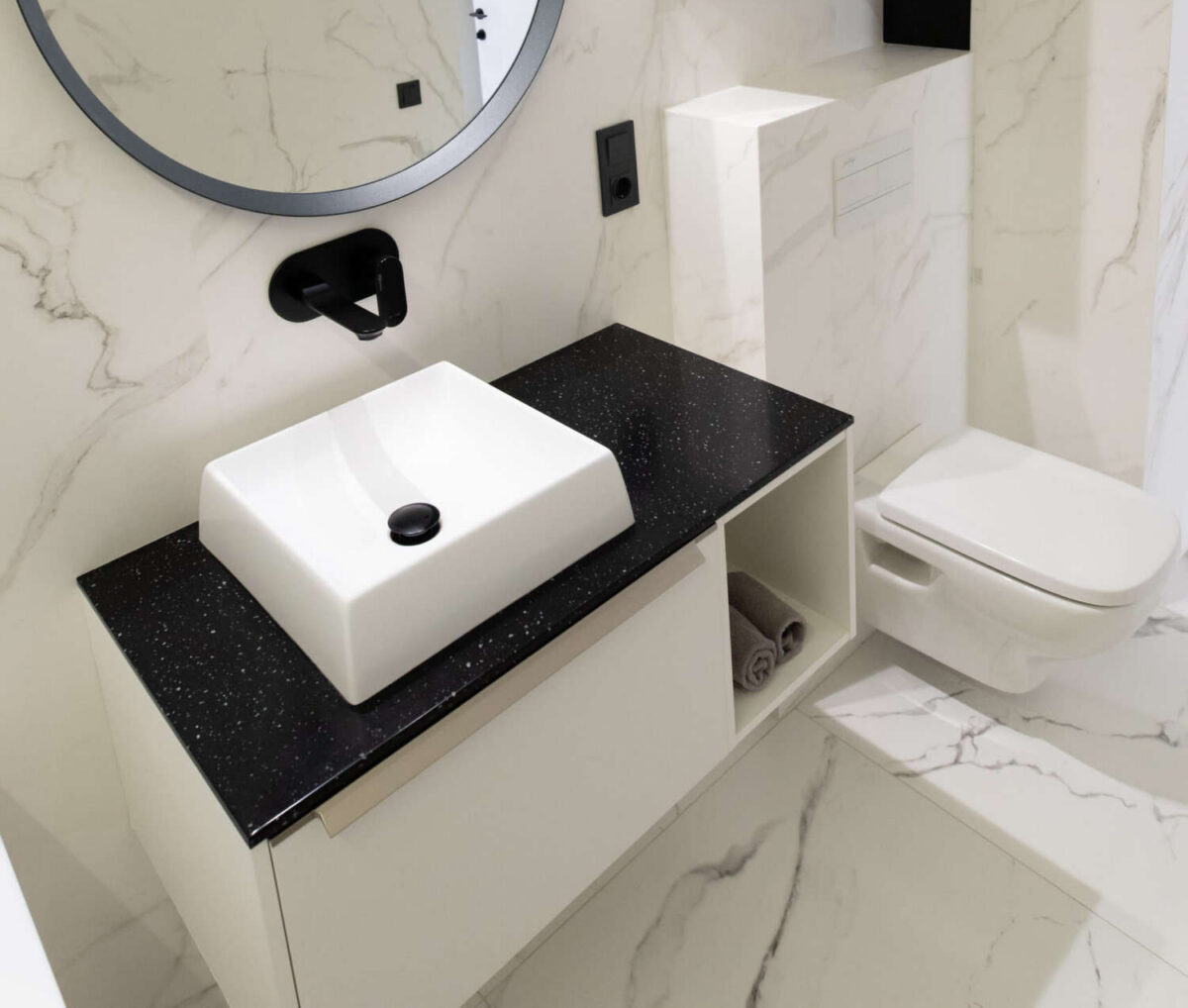
bathroom with marble tiles with a white cabinet and shelves

Finish Guide for Humid Environments

Key Tip: Always confirm compatibility of finish with substrate material—particularly in drywall over CMU, or previously painted walls with alkyd layers.

Product-Specific Recommendations by Brand

Sherwin-Williams

Benjamin Moore

Behr

PPG

Zinsser (Rust-Oleum)

Paint Systems by Facility Type

Specialty Add-Ons

Surface Preparation and Maintenance
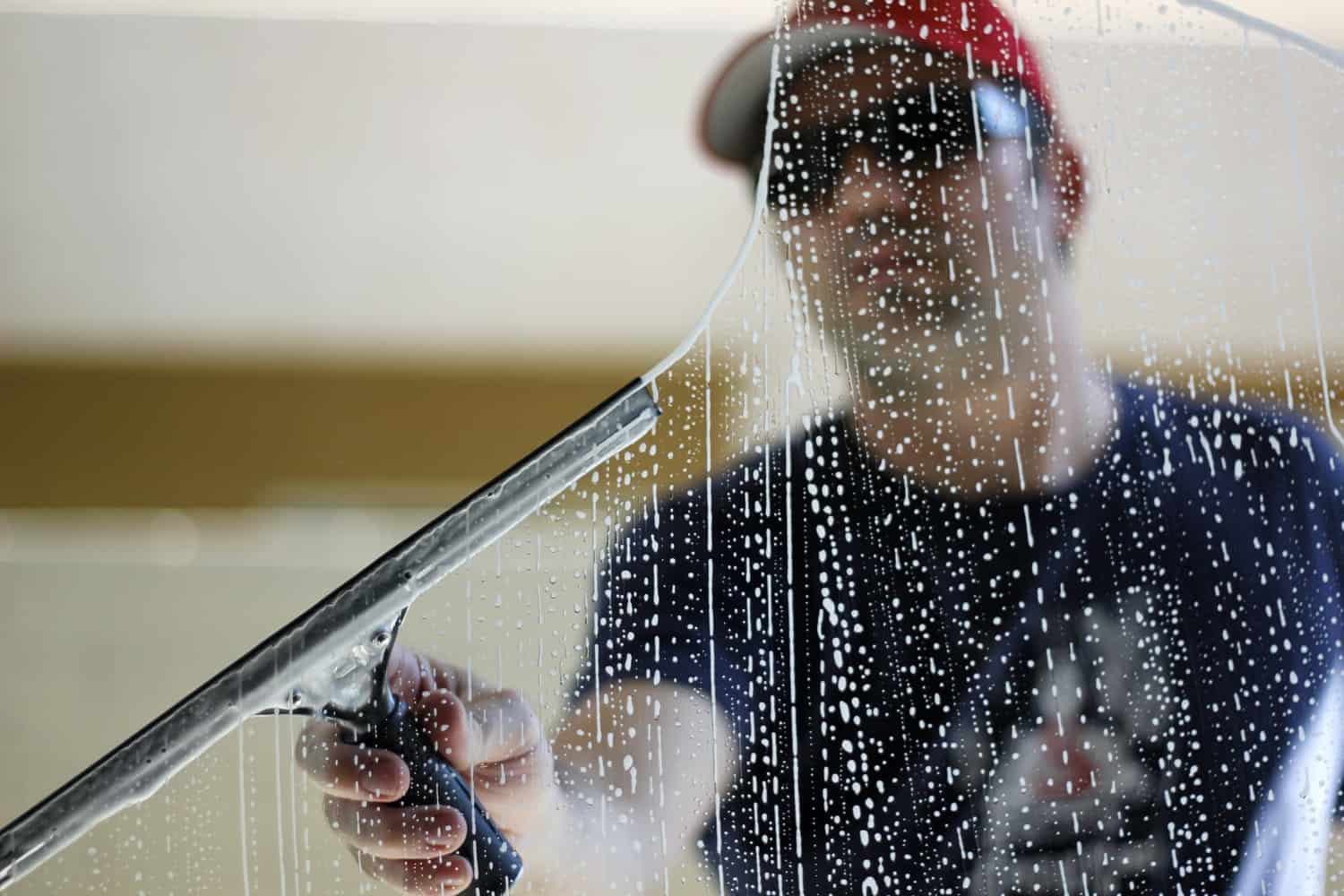
Pressure Washing

Surface Prep Protocol

  1. Degrease surfaces with trisodium phosphate (TSP) or a commercial degreaser
  2. Rinse and allow to dry fully
  3. Spot prime any stained or porous areas with mold-blocking primer
  4. Sand to dull glossy surfaces

For CMU or concrete, apply block filler or high-build primer.

Maintenance Plan

  • Inspect quarterly for adhesion loss or mildew recurrence
  • Touch-up paint with labeled original spec
  • Recoat every 3–5 years or per warranty cycle

Professional Application

  • Why Hire a Pro: Ensures correct surface prep, material choice, and adherence to drying conditions (temperature, humidity, substrate moisture)
  • Scheduling: Night or weekend application avoids customer disruption
  • Value-Added Services: Some contractors include substrate moisture testing, antimicrobial certification, or facility paint mapping

Humidity Shouldn’t Dictate Your Maintenance Schedule

Humidity-related damage in restrooms and utility zones is avoidable with the right coatings. Choosing a paint system that handles moisture, chemical stress, and hygiene standards is essential to performance and reputation.

Protect your facility from the inside out. Our team at Bigger Picture Painting can:

  • Schedule a free restroom paint audit
  • Recommend compliance-focused antimicrobial systems
  • Provide a Restroom Coating Selector cheat sheet on request