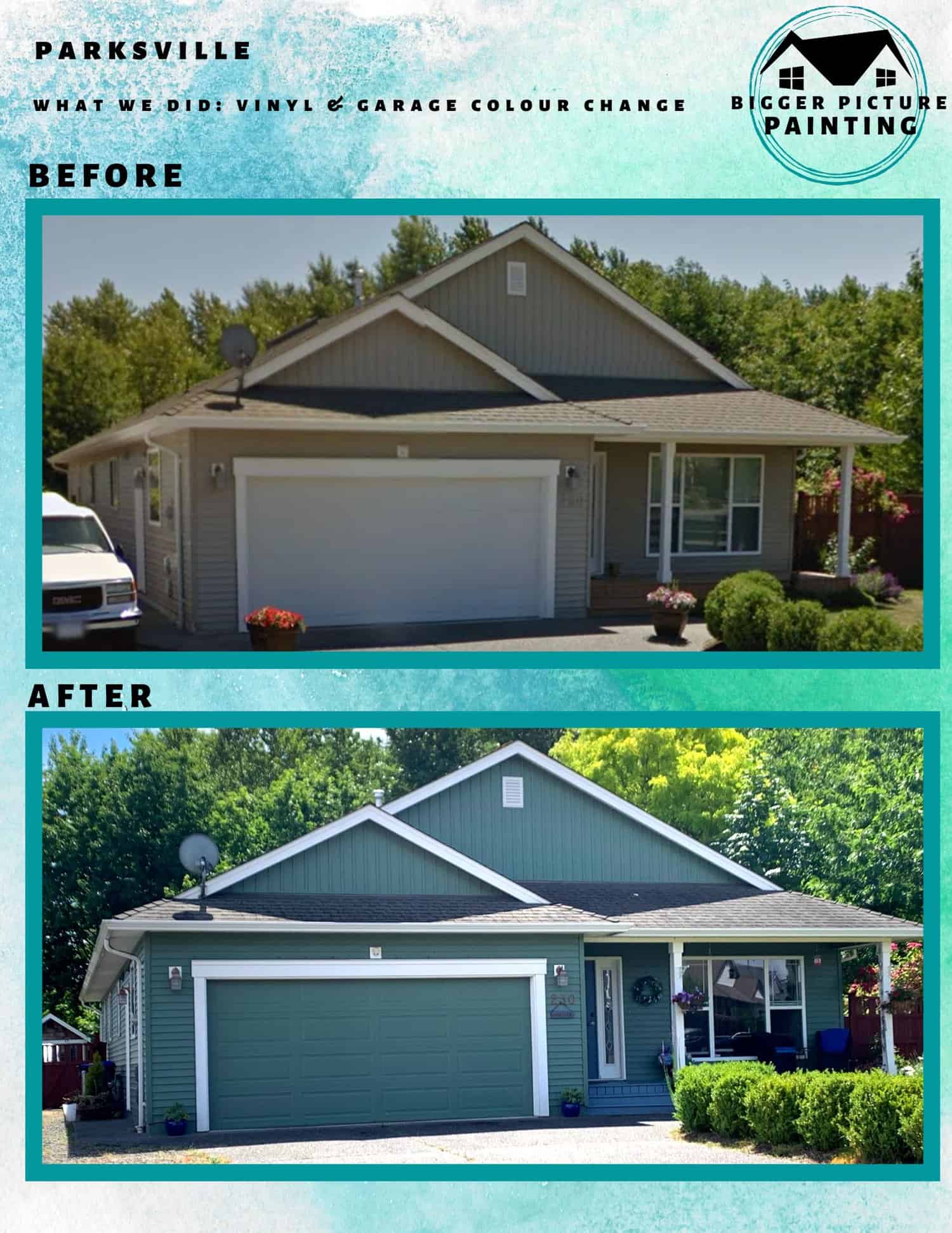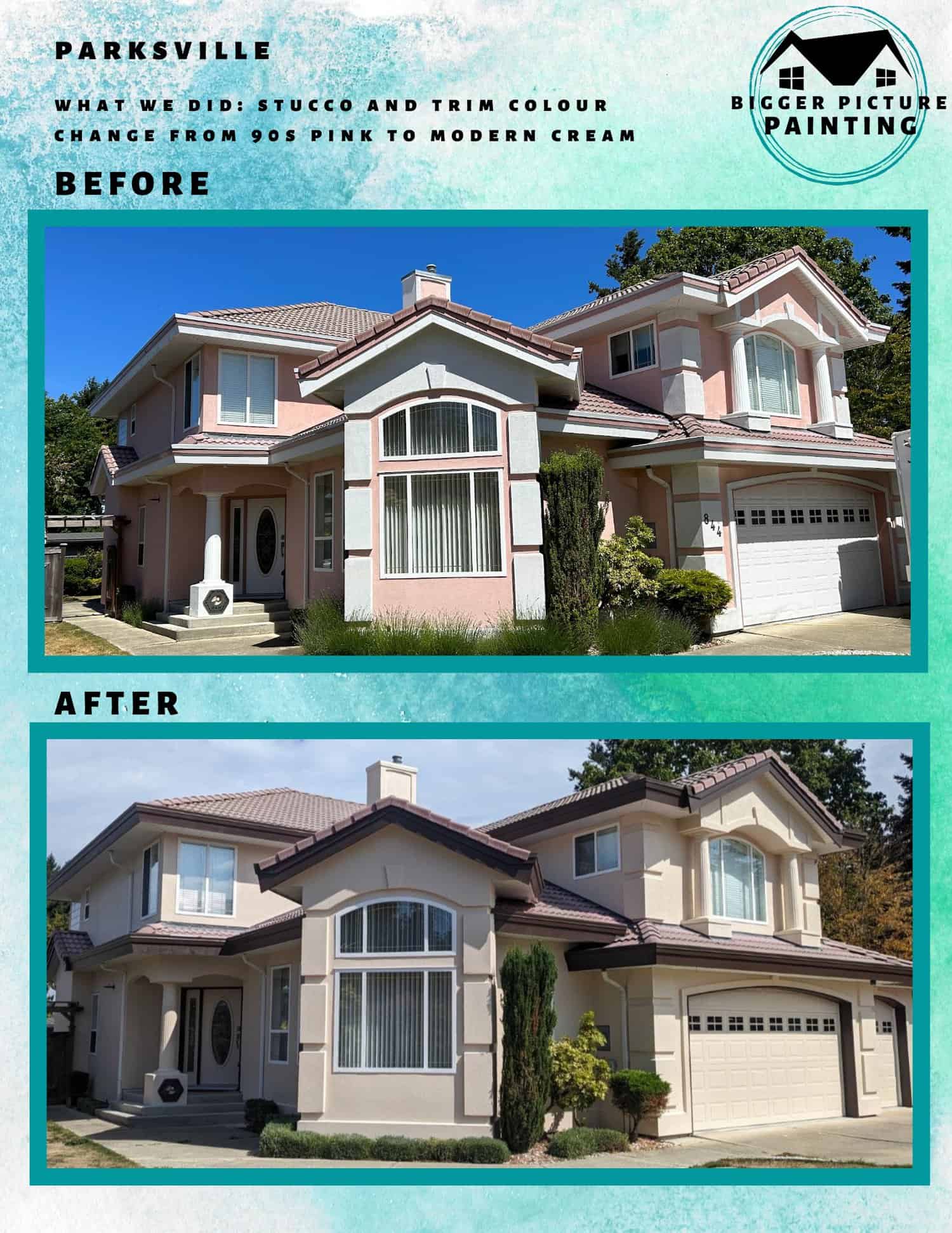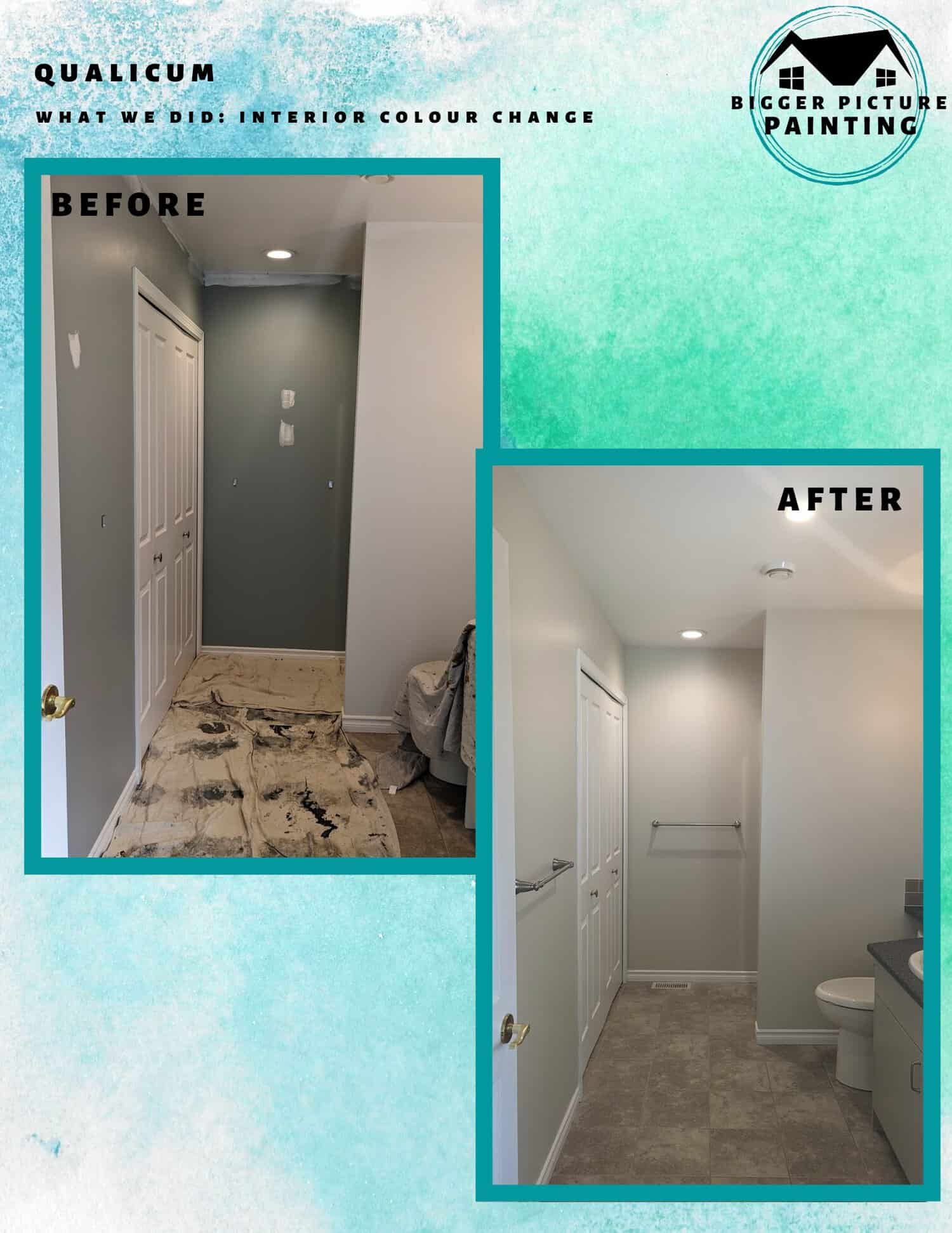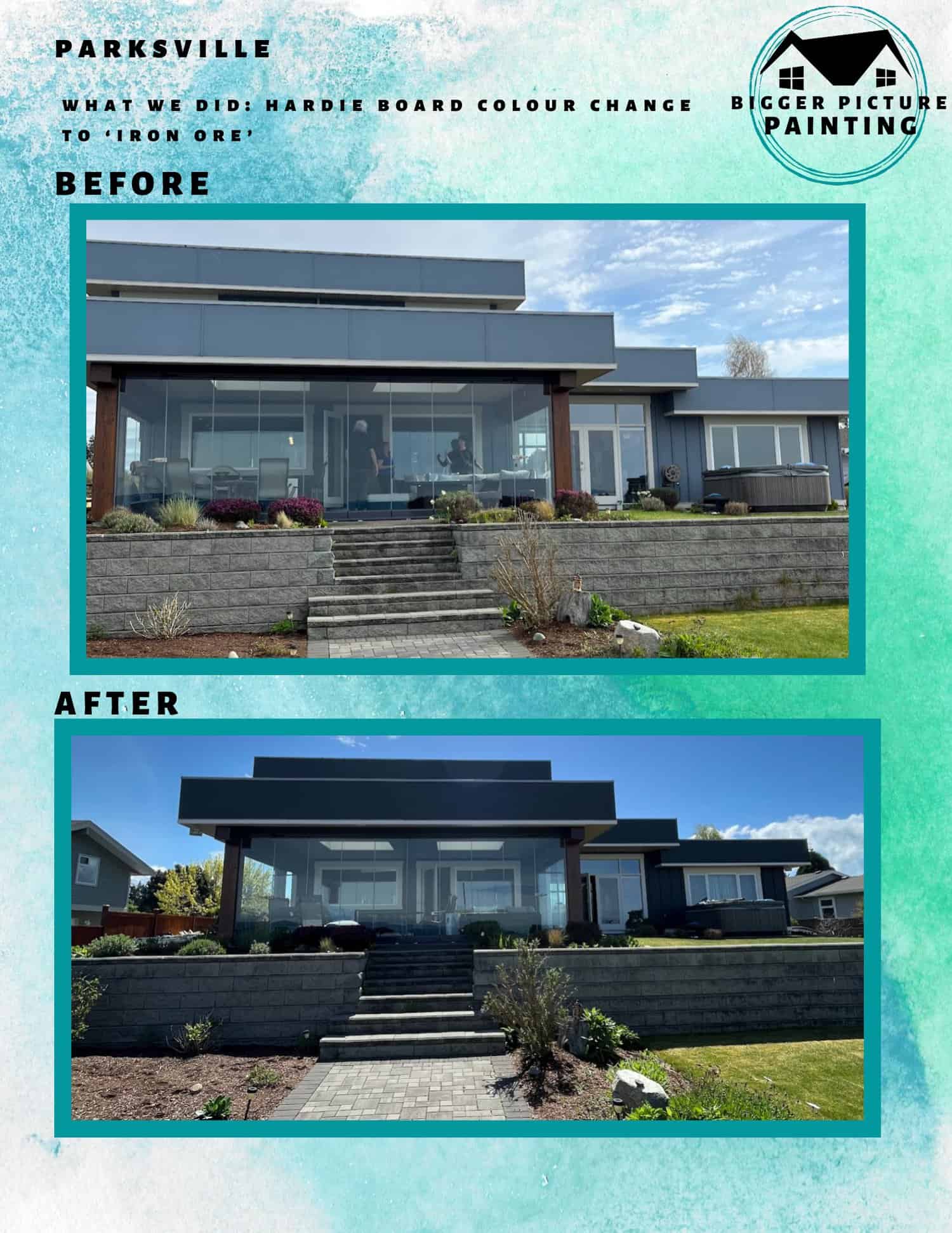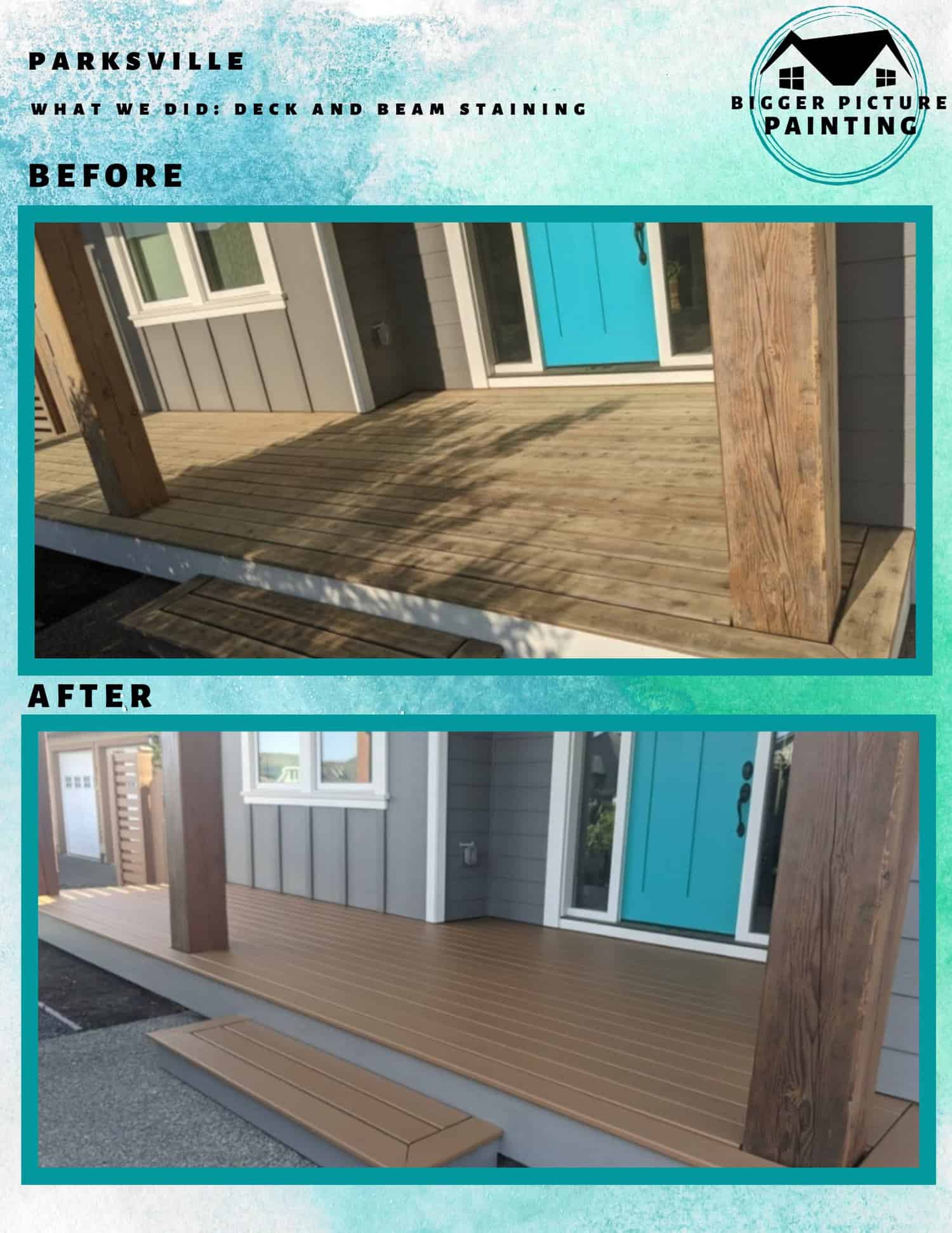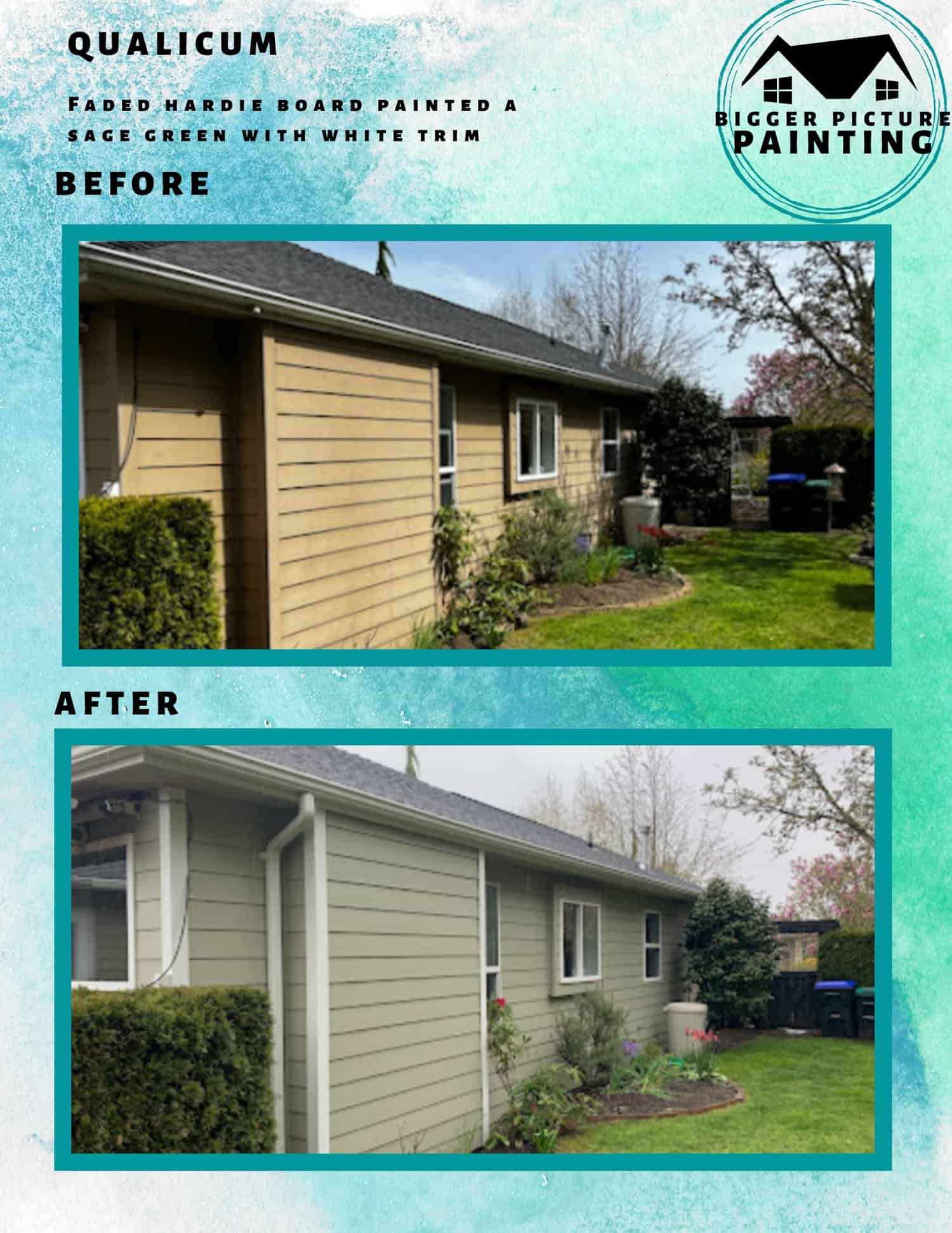
You walk around your Nanaimo home in fall, drizzle starts again, and you can see it on the siding. The finish is tired. Some sections look fine, others are graying out. So the question becomes the practical one: should you repaint, restain, or switch from one to the other, and which actually holds up best in Vancouver Island’s wet coastal climate?
Both finishes protect wood siding. They do it in fundamentally different ways. Paint forms a film on top of the wood; stain penetrates into it. That single distinction shapes how each one handles Nanaimo’s rain, fog, and humidity cycles, and it is the reason the right answer is not the same for every home on the island.
This guide breaks down the painting vs staining exterior house decision for coastal British Columbia: how each finish actually protects your home, what Nanaimo’s climate does to each one, the real cost picture across a decade, and how to decide for your specific house.
Key Takeaways
- Paint forms a surface film that provides stronger UV protection and unlimited color options.
- Stain penetrates into wood grain, lets the wood breathe, and ages by fading rather than peeling.
- Paint lasts 7 to 10 years on Vancouver Island siding; stain typically lasts 3 to 7 years.
- Your existing finish narrows the choice: paint over paint, stain over stain, unless you fully strip.
- Nanaimo’s frequent rain and humidity often favor stain’s flexibility on natural wood siding.
Painting vs Staining Exterior House: How Each Protects Your Home
The core difference between painting and staining is mechanical. Paint sits on the surface of the wood. Stain soaks into it. That distinction drives everything else.
How Paint Works
Paint creates a film on top of your wood siding that completely covers the surface and hides imperfections. A layer of paint is thicker than stain and seals out moisture from above, which is why it offers stronger UV protection and far more color flexibility.
For older siding with visible flaws you want to hide, paint is usually the right tool.
How Stain Works
Stain penetrates into the grain of the wood and provides a natural-looking finish while still protecting against moisture, UV, and pests. Because stain absorbs into the wood instead of sitting on top, the natural texture and grain stay visible.
For cedar or other attractive wood siding common on Nanaimo homes, that visual character is often the whole reason homeowners pick stain in the first place.
Why Nanaimo’s Climate Matters for Your Decision
Vancouver Island’s coastal climate is the single biggest variable in how each finish performs on a Nanaimo home.
The Moisture Reality
According to Environment Canada climate data, Nanaimo averages roughly 1,100 mm of annual rainfall, with most of it concentrated between October and March. That sustained wet season means wood siding goes through nearly six months of constant moisture exposure every year.
Add morning fog and persistent humidity, and you have one of the wettest climates in Canada for residential wood finishes.
What That Means for Each Finish
In dry, sunny climates, paint typically outlasts stain because of its UV resistance. In wet, variable regions like Nanaimo, stain often wins because it lets wood breathe rather than trapping moisture under a sealed film.
Wood that expands and contracts daily through wet and dry cycles puts paint under stress that pulls the film off the substrate, while stain flexes with the wood movement instead of fighting it.
Durability: How Long Each Option Actually Lasts
The honest comparison depends on the product, the substrate, and the climate. Coastal British Columbia shortens both timelines compared to drier inland regions.
How Long on Vancouver Island
Exterior paint typically lasts 7 to 10 years on vertical siding in Nanaimo with proper prep and quality product. Solid stain lasts 5 to 7 years, while semi-transparent and transparent stains fade faster, often needing recoating every 3 to 5 years.
Pacific Northwest humidity pulls both timelines toward the lower end of national averages.
How Each One Fails
When paint fails, it peels. When stain fails, it fades. That single difference changes the entire maintenance picture.
Paint failure means scraping, sanding, and re-priming damaged areas before any new coat goes on. Stain failure usually means cleaning the surface and applying a fresh coat directly over the faded existing finish.
Surface Condition and Previous Finishes
What is already on your siding decides which option is realistic, regardless of preference.
The Hard Rule
Paint can be applied over previously painted surfaces with proper prep. Stain cannot be applied over paint; the stain needs raw wood to penetrate, so going from paint to stain means stripping the existing coating down to bare wood first.
That stripping step adds significant time and cost, often enough to flip the financial math of the entire project.
For New or Recently Stained Wood
Solid stain works best when applied to fresh wood because it enters the grain better and serves as its own primer. For new construction or replaced siding, you have the full choice between paint and stain without prep penalties.
For deeper context on the basic comparison, see our guide on paint or stain wood siding.
Maintenance Requirements Over Time
The ongoing maintenance picture is fundamentally different for each finish, and it often decides the call for busy Nanaimo homeowners.
Paint Maintenance
Paint maintenance is less frequent but more intensive. Color and sheen matching gets harder after the surface has faded for a few years, so touch-ups often look like patches.
When paint does fail, the repair requires scraping, sanding, priming, and repainting the affected area. The work is real.
Stain Maintenance
Stain maintenance is more frequent but much simpler. There is no scraping required because stain fades rather than peels.
You can typically clean the surface, let it dry, and recoat directly over the existing stain when it starts to look tired. For paint product comparison if you go that route, see our guide on oil vs latex exterior paint.
Cost Considerations for Nanaimo Homeowners
Upfront costs favor stain, but the 10-year picture often tells a different story.
The Per-Gallon Math
A high-end exterior paint runs roughly $60 to $90 CAD per gallon. Quality stain runs $40 to $60 CAD per gallon, and stain typically requires only one coat where paint needs two over primer.
That gap on material plus labor savings on prep makes stain meaningfully cheaper to apply initially.
The 10-Year Picture
The upfront savings on stain narrow over a decade. If paint lasts 8 years and stain lasts 4 years on Vancouver Island, you may stain twice for every one paint job.
Run that calculation across material, labor, and disruption, and the long-term cost between paint and stain often lands close to even. For a deeper look at how project conditions move the price, see our breakdown of what affects exterior painting cost.
Appearance and Style Preferences
Aesthetic preference is often where the painting vs staining exterior house decision gets made before the technical comparison is even on the table. The look each finish produces is fundamentally different.
What Paint Offers
Paint provides a much wider colour range than stain and a polished, uniform appearance. If you want bright colours, need to match existing trim, or want to dramatically change your home’s look, paint is the only realistic option.
Modern, clean-lined home styles particularly suit a painted finish.
What Stain Offers
Stain lets the natural grain and texture of the wood show through. For homes with cedar, fir, or other attractive wood siding common on Vancouver Island, stain showcases the wood’s character rather than hiding it.
The look skews rustic, natural, and warm, which suits a lot of West Coast architecture.
Special Considerations for Different Surfaces
Not every surface should get the same treatment. Mixing the two finishes intelligently is often the right answer for a Nanaimo home.
Trim and Detailed Woodwork
For trim, fascia, and detailed woodwork, paint usually wins. These areas demand a polished, uniform look to either match or intentionally contrast with the main siding.
The precision and clean lines paint produces work better for the architectural detail of windows, doors, and corners.
Decks and Fences
Decks and fences typically benefit from stain. The finish ages gracefully, does not require sanding between recoats, and can be refreshed easily as the wood weathers.
For decks specifically, the horizontal exposure and foot traffic punishes paint in a way that pushes most Nanaimo homeowners toward stain anyway.
Older Siding With Visible Damage
Older siding with small cracks, weathered patches, or surface imperfections often benefits from paint’s hiding power. Paint can also seal small cracks more effectively than stain.
If your siding shows its age and you want a refreshed, modern look, paint is the right tool.
Making the Right Choice for Your Home
For most Nanaimo homes, the right answer between painting and staining comes down to four practical questions.
The Four Questions That Decide It
First, what is already on your siding? Painted siding usually stays painted; stained siding can stay stained or strip to a full repaint.
Second, what wood is underneath? Cedar and other attractive natural woods favor stain. Older or damaged wood favors paint.
Third, how much maintenance do you want to do? Less frequent but more intensive (paint), or more frequent but simpler (stain).
Fourth, what look are you going for? Polished and uniform leans paint. Natural and rustic leans stain.
When Each One Wins
Choose paint if you have previously painted siding, want bold or specific colours, or need to hide visible imperfections on older wood.
Choose stain if you have new construction or natural cedar siding you want to showcase, prefer easier ongoing maintenance, or want a finish that handles Vancouver Island’s wet climate by breathing rather than sealing.
Your home is the biggest visible asset on your lot, and Nanaimo’s coastal climate does not forgive a wrong call on finish. Whether you want an honest assessment of which finish your specific siding actually needs, advice on timing the job around the wet season, or a full professional application that holds up to Vancouver Island weather for the next decade, our team at Bigger Picture Painting will walk you through exactly what your home needs.
Call 778-200-7756 for a FREE estimate today.