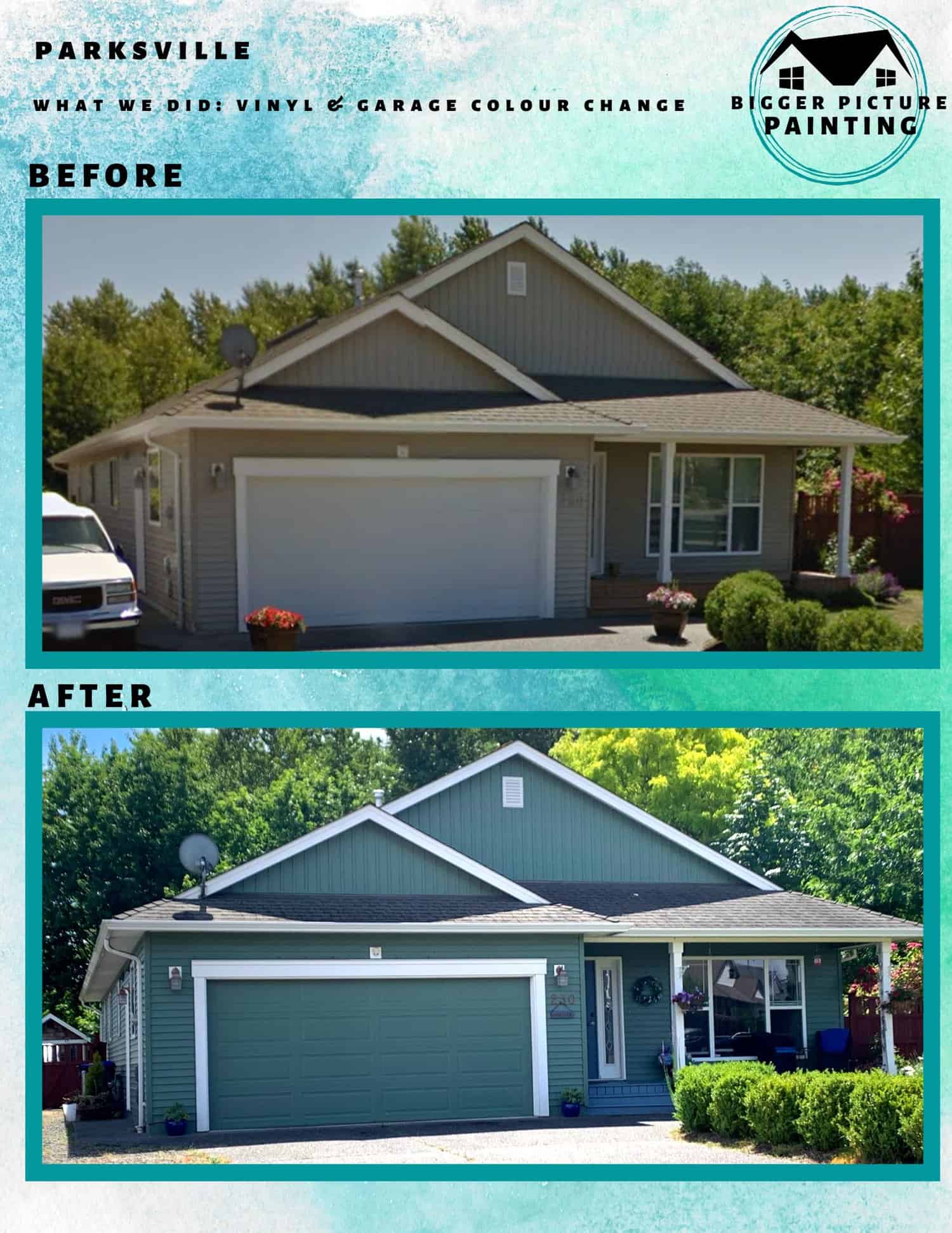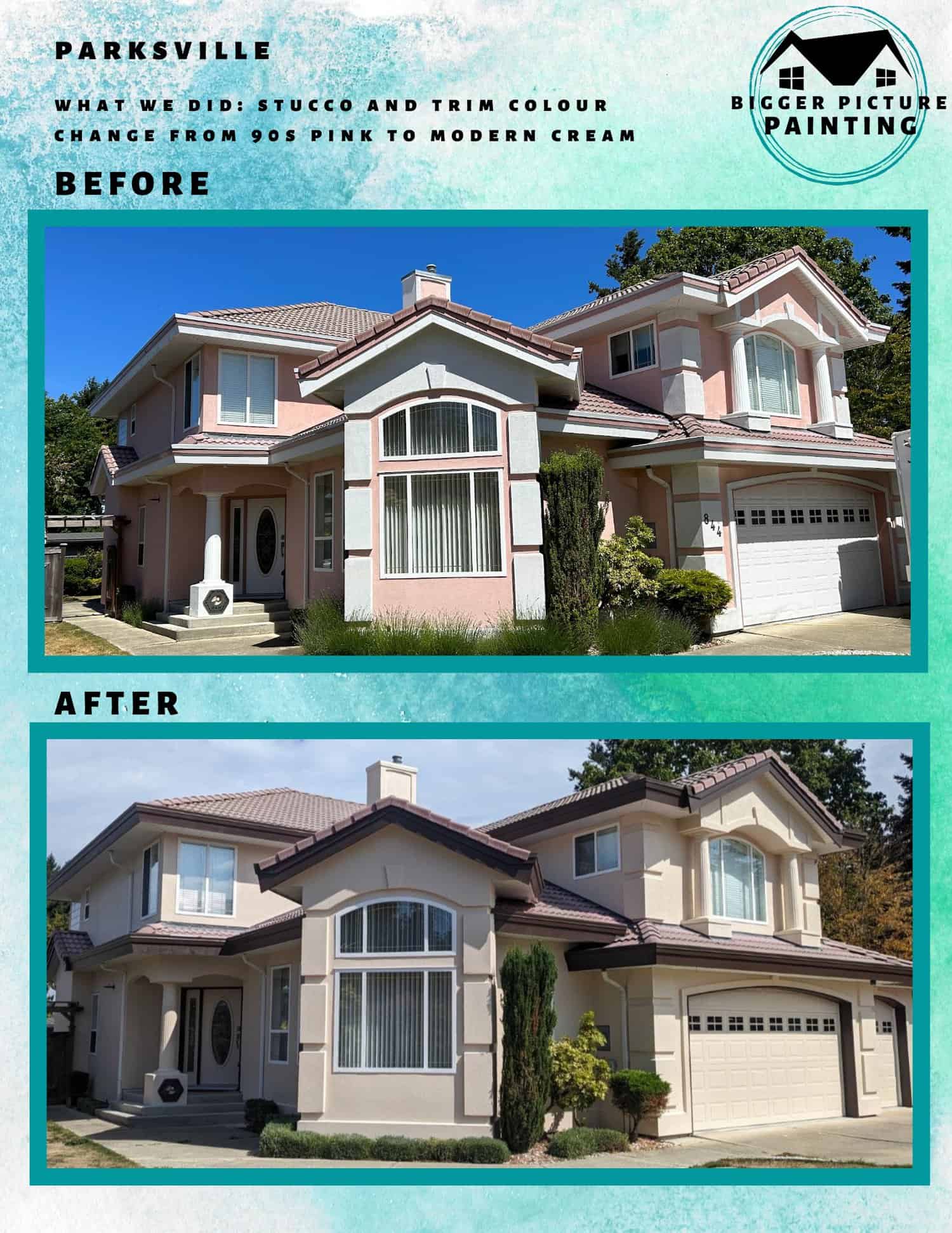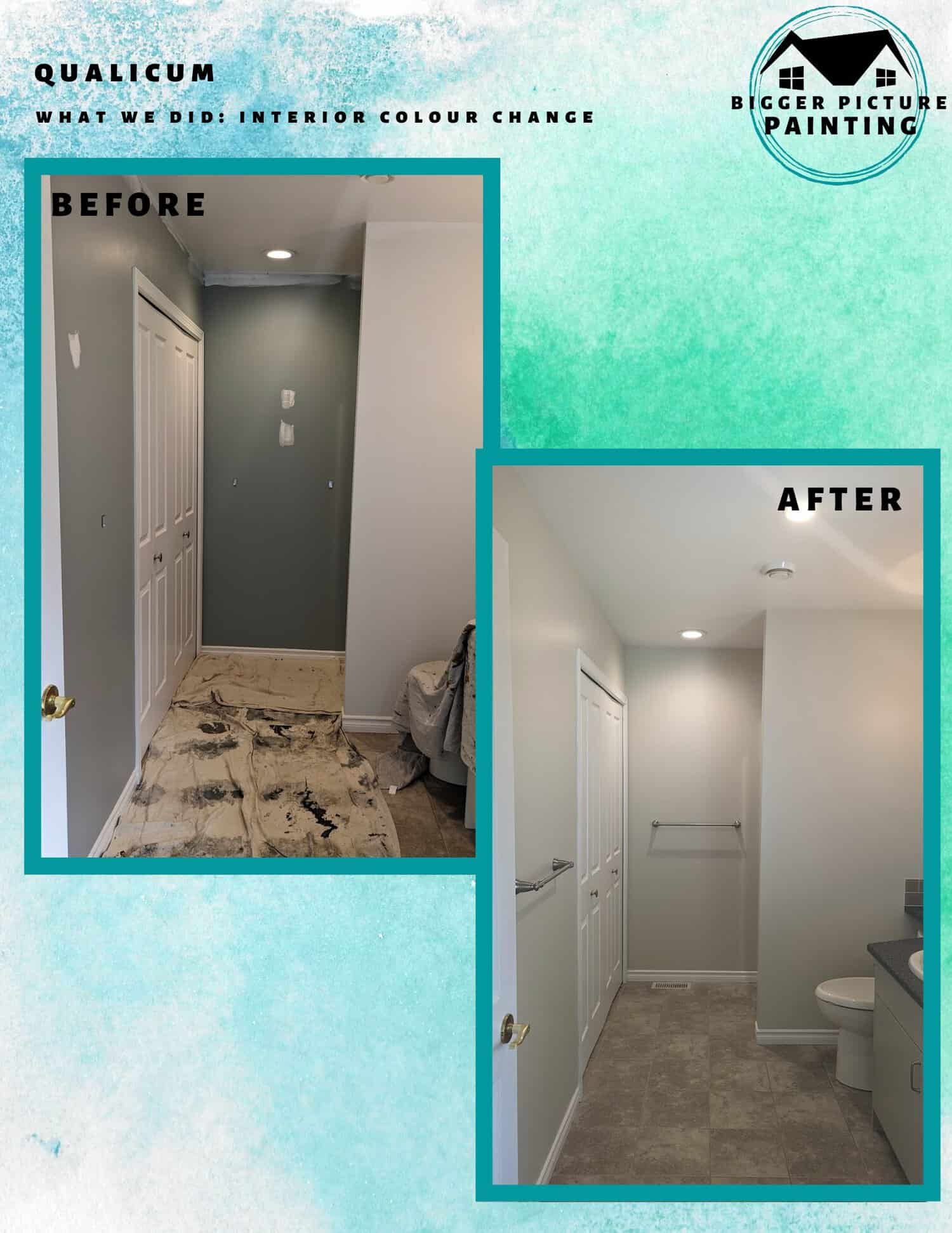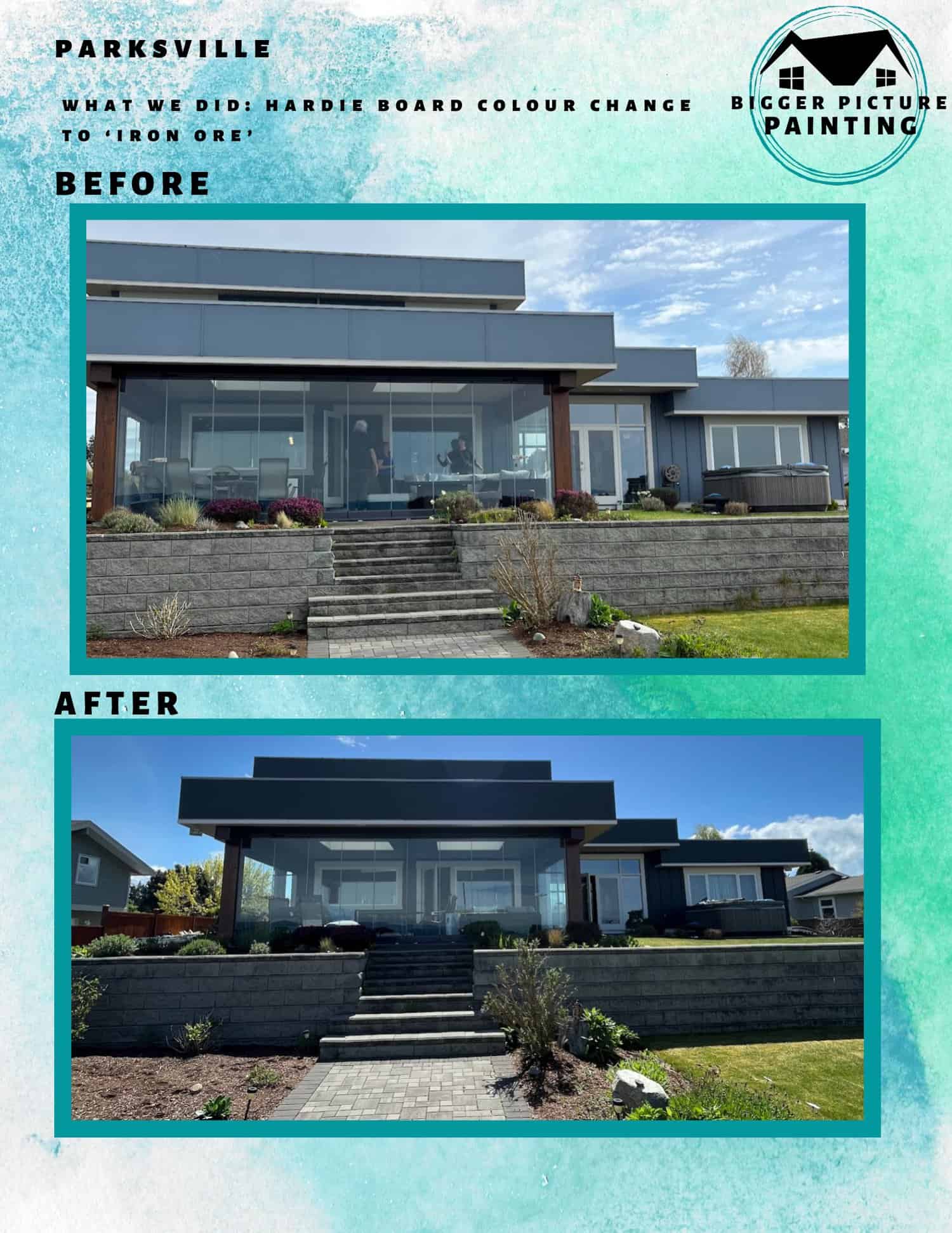
Paint that looks great in October can look tired by March. Vancouver Island’s wet season puts interior paint through conditions that most national brand guides never account for: months of sealed homes, condensation on windows, and humidity that builds steadily in bathrooms, laundry rooms, and lower-level spaces.
Picking the best interior paint for durability here is not just about brand names. It comes down to understanding what your walls actually face through an Island winter and matching your product choices to those specific conditions.
Here is what you need to know.
Key Takeaways
Why Vancouver Island Winters Are Hard on Interior Paint
Vancouver Island’s east coast, including communities like Parksville, Qualicum, Duncan, and Mill Bay, receives around 950 mm of rain per year with most of it falling between October and March. During those months, homes stay sealed against the cold and damp, and indoor humidity has fewer places to go.
Bathrooms without proper exhaust ventilation, laundry rooms, and any space above a crawlspace can see indoor humidity climb well above the 30 to 50% range where interior paint performs best. At elevated humidity levels, the paint film absorbs moisture vapor, the binder gradually weakens, and early signs of failure start to appear including staining, bubbling, and mold growth on the surface.
For Nanaimo house painters and crews working from mid-Island south to Greater Victoria, this wet-season reality shapes every product decision on interior projects. The products that last here are chosen for moisture resistance first, not just color retention or coverage.
Finish Level Is Your First Decision
Before the brand or the formula, the finish level is what determines how much your walls can handle. Paint sheen and durability are directly linked: the higher the sheen, the denser the dried film, and the more resistant it becomes to moisture, cleaning, and daily wear.
Here is how the levels break down for Island homes:
- Flat or matte: Best for ceilings and low-contact walls. Not cleanable or moisture-resistant. Avoid in any room with regular humidity exposure.
- Eggshell: Good for bedrooms and living rooms. Light wiping only. Not a good fit for wet rooms.
- Satin: The most versatile choice for Vancouver Island homes. Handles regular cleaning and resists moisture vapor in most living spaces.
- Semi-gloss: The right call for bathrooms, kitchens, trim, and laundry rooms. Denser film, easier to clean, and the most moisture-resistant standard finish.
The most common mistake is using the same finish throughout the whole house. Satin works well in living areas, but semi-gloss earns its place in every room that sees steam, water splashes, or cleaning products on a regular basis.
What Makes a Paint Actually Durable
Durability comes from chemistry, specifically the type and concentration of binder in the formula. The binder is the resin that holds pigment to the wall after the carrier evaporates. 100% acrylic binders form a denser, more flexible dried film than vinyl-acrylic blends, which makes them better at resisting moisture penetration, cleaning abrasion, and the temperature cycling that Island winters produce.
According to Sherwin-Williams’ technical guide on paint performance, higher volume solids, the percentage of material that stays on the wall after the carrier evaporates, directly increases coating thickness, adhesion strength, and long-term wear resistance. Premium 100% acrylic formulas carry higher volume solids than budget alternatives. That is the actual reason a premium paint outlasts a cheaper one, not just the name on the label.
Oil-based paints were once seen as the tough option, but they come with real drawbacks in wet coastal climates. Common oil-based paint errors like applying them in high-humidity conditions or over surfaces with any trapped moisture cause adhesion failures that 100% acrylic latex handles far more reliably.
Rooms That Take the Biggest Hit in Island Winters
Bathrooms, laundry rooms, and basements are where interior paint fails fastest in Vancouver Island homes. These rooms combine heat, steam, limited ventilation, and sustained elevated humidity, which the wet season only makes worse.
The Canada Mortgage and Housing Corporation’s guidance on mold in your home identifies indoor humidity above 50% as the threshold where mold growth on building materials becomes likely. In a bathroom without adequate exhaust ventilation during Island winters, staying under that threshold takes consistent effort.
For these rooms, using primer before painting walls with a mold-resistant or moisture-blocking formula is not a luxury. Applying a premium topcoat directly over unprimed drywall in a bathroom leaves the paint film vulnerable to vapor pressure from behind the wall, which causes peeling regardless of what product you use on top.
Prep Is Where Durability Starts
Every painter will say this: prep matters more than the paint. On Vancouver Island, where interior surfaces already face seasonal humidity stress, prep failures show up faster than in drier climates.
Paint cannot grip a dirty, chalky, or glossy wall. In wet-season rooms especially, any surface instability becomes a failure point within the first winter cycle. Common prep steps that get skipped and cause early paint failure:
- Not cleaning walls before painting, leaving grease, dust, or condensation residue on the surface
- Skipping repairs on small cracks or damage, which let moisture work behind the film
- Applying topcoat over existing gloss without sanding or a bonding primer first
- Painting before patches are fully dry, which traps moisture under the new film
Poor surface prep before painting is the most common reason interior paint fails ahead of schedule on the Island. No product makes up for skipping this step.
Best Interior Paint for Durability Room by Room
Here is a practical breakdown for Vancouver Island homes:
| Room | Recommended Finish | What to Look For |
|---|---|---|
| Living room | Eggshell or satin | Good coverage, light cleanability |
| Bedroom | Flat or eggshell | Hides imperfections, low contact |
| Kitchen | Satin or semi-gloss | Resists grease, moisture, frequent cleaning |
| Bathroom | Semi-gloss | Mold-resistant formula, steam-tolerant |
| Laundry room | Semi-gloss | Handles humidity, easy to wipe down |
| Hallways | Satin | Stands up to daily foot traffic |
| Trim throughout | Semi-gloss | Durability contrast to wall finish |
Sherwin-Williams Emerald Interior and Benjamin Moore Aura Interior are both 100% acrylic, zero-VOC formulas that consistently deliver 7 to 10-year lifespans on properly prepped surfaces. Budget vinyl-acrylic products on the same surfaces typically show visible wear in 3 to 5 years, particularly in moisture-prone rooms. The performance gap between premium and budget paint is most obvious in Island homes during the wet season because the conditions amplify every weakness in the product.
When It Makes Sense to Call Painters
Choosing the right product, finish, and primer for each room in a Vancouver Island home is a lot to manage, especially when the wet season gives you very little margin for error. Getting even one of those decisions wrong in a moisture-prone room means redoing it sooner than you planned.
The team at Bigger Picture Painting works in these homes through every wet season. Our interior house painting services start with understanding your home, your specific rooms, and the conditions they face through Island winters.
Call us at 778-200-7756 for a FREE estimate today.