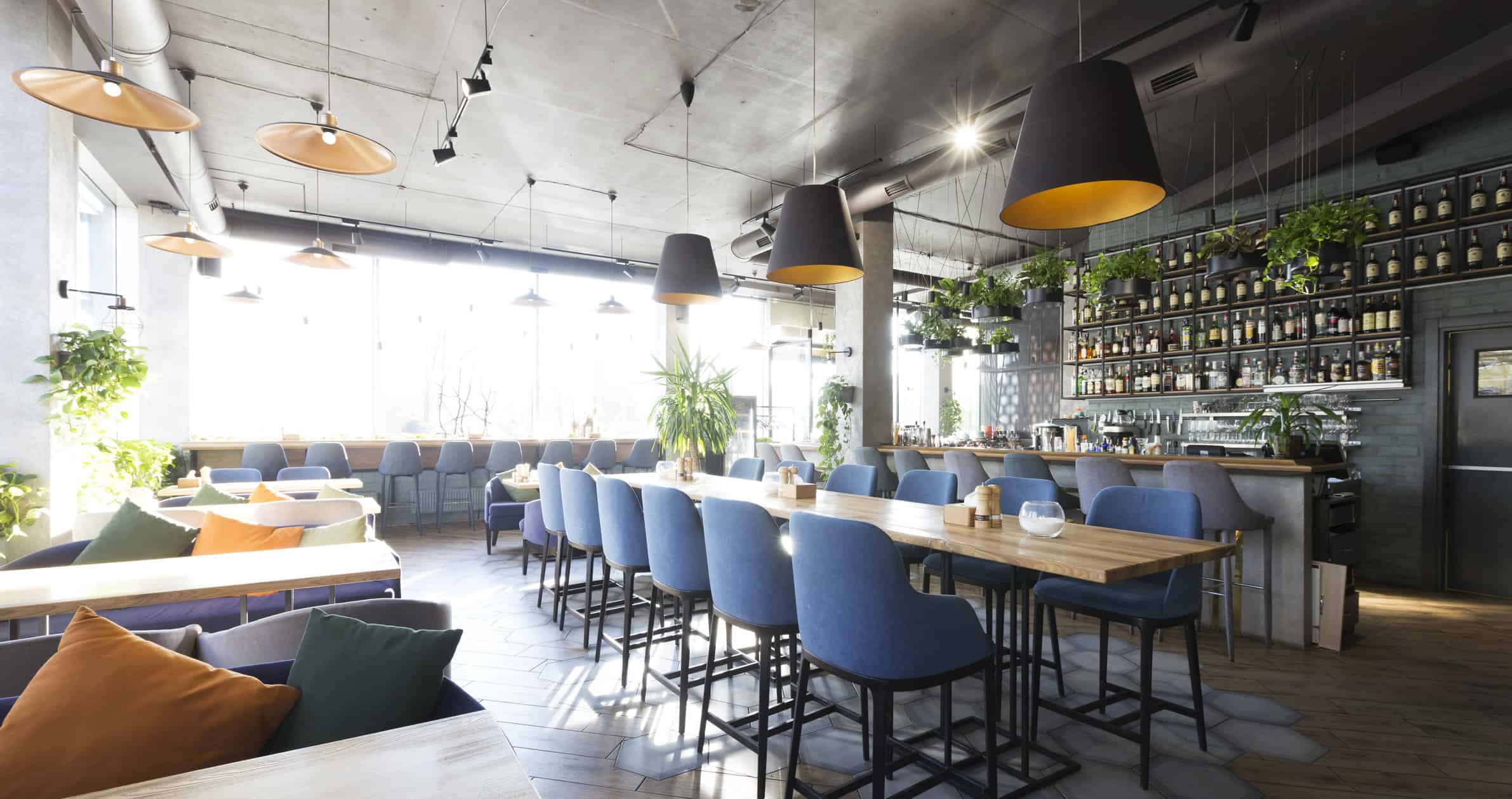
The commercial painters Nanaimo restaurant owners call are usually handed the same two-part brief: make the room feel warm, and make the surfaces pass inspection. Restaurant painting is where those two jobs quietly work against each other, because the finish that flatters a dining room is often the same finish that gives out on a prep line. In most quotes I read, the dining room gets all the design thinking and the back of house gets whatever budget is left over. That order is backwards. A properly planned interior commercial painting job treats the front and the back as two different problems, with two different specs, on one shared schedule.
I am writing this the way I would explain it standing in your kitchen with a clipboard. You should be able to read this and then push back on any painter who quotes your space, including me. No sheen chart to memorize. Just the rules that apply, the spots that fail first, and the two numbers worth asking for before you sign anything.
What the Health Rules Actually Say About Your Walls
Owners often expect a list of approved paints. No such list exists. British Columbia’s Food Premises Regulation takes a plain-language position instead: food premises must be built and kept so they can be maintained in a sanitary condition, and plans for construction or alteration go to a health officer before the work starts. Island Health environmental health officers apply that standard in person, room by room. The test is not what the paint is called. The test is whether the surface can be cleaned and stay clean.
Health-authority plan-review documents across BC repeat the same four words for walls and ceilings in food prep, storage, and dishwashing areas: smooth, impervious, durable, easily cleaned. Light colours are preferred, because dirt shows against them. A flat or matte wall paint fails that description almost by definition, since it is porous by design and surrenders its film the first time somebody scrubs it. That is the whole regulatory picture in one paragraph.
Where Restaurant Painting Fails First
Paint does not wear out evenly across a restaurant. It fails in a handful of spots, and it fails for a reason. Every one of these zones has a different enemy, which is exactly why a single spec across the whole building is a losing bet.
| Zone | What attacks the paint | What shows up first |
|---|---|---|
| Cookline walls and surrounds | Airborne grease, heat, steam | Yellowing, tacky film, grease that will not wipe off |
| Dish pit and pot sink | Constant humidity, hot splash, caustic detergent | Blistering, peeling at seams, mildew in corners |
| Walk-in surrounds and prep walls | Condensation, cart strikes, daily sanitizer | Chalking, gouges, bleach marks from sanitizer |
| Service corridor and swing doors | Shoulder traffic, trays, kick plates | Scuffs and burnished shine where staff brush past |
| Staff and guest washrooms | Humidity, high-touch cleaning | Mildew, thin spots around switches and handles |
| Dining room walls | Chair backs, hands, occasional spills | Marks at chair-rail height |
Five of those six zones sit back of house or in transit, and only one is the room your guests photograph. The budget split in most quotes runs the other way around.
The Ambiance Trade-Off Nobody Puts in the Quote
Here is the tension in one sentence: the softer and flatter a finish, the better it hides wall imperfection and the warmer a room reads, and the faster it gives out under cleaning. The harder and glossier a finish, the longer it survives a scrub brush, and the more it throws light and shows every ripple in the drywall.
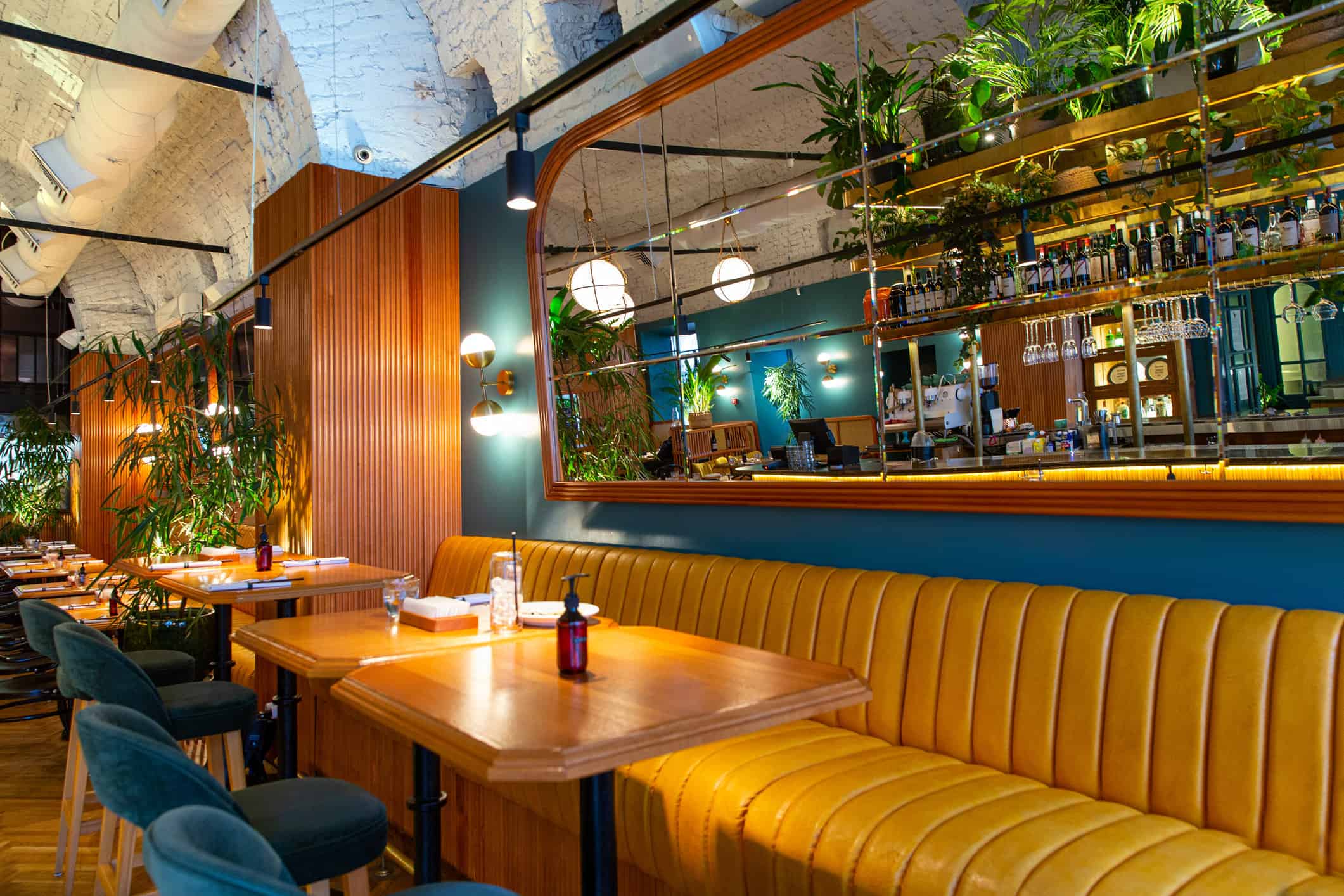
Owners hear that and assume they have to pick a side. They do not. The mistake is treating a restaurant as one space with one spec. Your dining room and your prep line have almost nothing in common except a shared wall. A dining room can carry a low-sheen, deep, moody colour and hold up for years, because the only thing touching it is a chair back. Put that same product six metres away above a fryer and you are repainting inside a year.
Matching the Finish to the Zone
Here is the split I bring to a walkthrough. Treat it as the start of a conversation, not a rule sheet, because your menu and your cleaning routine change the answers.
| Area | Practical finish | Why it holds |
|---|---|---|
| Dining room walls | Eggshell, or a scrubbable matte | Soft light, hides older drywall, wipes at chair height |
| Dining room feature wall | Matte or high-gloss, by design intent | Both work where traffic is low |
| Trim, doors, chair rails | Semi-gloss | Takes repeat cleaning and impact |
| Service corridors and stairwells | Satin or semi-gloss | Constant shoulder and cart contact |
| Prep, dish, and dry storage walls | Semi-gloss, or an epoxy-modified coating | Smooth, non-porous, stands up to caustic cleaners |
| Cookline walls | A hard surface such as FRP, stainless, or tile | Grease and heat beat any wall paint over time |
| Washrooms | Semi-gloss | Moisture resistance and daily cleaning |
| Ceilings in food areas | Smooth washable coating, never textured | Texture cannot be wiped clean |
The row people argue with is the cookline. Paint alone behind cooking equipment is a maintenance commitment, not a finish. I say that during the walkthrough even when it means a smaller paint invoice for me. When we scope an interior commercial painting job for a food business, that one line gets called out separately so nobody is surprised by it later.
The Two Numbers to Ask Any Painter For
Most restaurant painting quotes list rooms and a price. That tells you nothing about how long the work lasts. Two numbers turn a vague promise into something you can hold a contractor to.
There is a third question worth asking: what happens at the joint where painted drywall meets the hard surface behind the equipment? Open seams are where an inspector’s pen goes.
Why Closed Days Cost More Than Paint
Restaurant margins leave no room for a second attempt. Statistics Canada reported that food services and drinking places ran operating expenses at 95.7% of operating revenue in 2022, leaving a profit margin of 4.3%. At that spread, every shut day has to be earned back out of a very thin slice.
Run it against your own numbers. A room doing $4,000 a day at a 4.3% margin clears about $172 in profit. Lose two unplanned days to a finish that was opened too early and you have given up roughly $344 in profit, plus the wages you still paid and the regulars who made other plans. Sequencing matters more than the per-litre price of the coating. Overnight work, zone-by-zone staging, and low-odour products keep the room earning while the work gets done.
Where Low-Bid Restaurant Painting Goes Sideways
I get called in behind other crews often enough to see the same three failures. Each one is a decision made at quoting time, not a surprise that appears later.
None of that shows up when you line three quotes side by side. It shows up a year later, when the cheapest bid turns into the most expensive one.
How We Plan a Restaurant Painting Job
Here is what Bigger Picture Painting does before anyone opens a can. Every step below happens before the first drop cloth comes out of the van.
We do this with an in-house crew across Nanaimo, Ladysmith, Duncan, Parksville, and Qualicum. No subcontractors, which means the people who wrote the spec are the people holding the brush. Bigger Picture Painting is licensed and insured, WCB certified, and BBB accredited.